|

|
Everything Fishy's
cleanup, sealant, redo page.
Telephone: 817-293-1782. Email us
Info, including construction date and some specs, are above the images.
Ponds in order by construction date, most recent on top. While most of our ponds serviced and built are
in DFW, Texas, we do stretch the margins of the metroplex on both sales and construction. We cleaned, may have sealed concrete,
limestone or sandstone that leached, changed a liner, redid a waterfall, basically gave these a face-lift.either built or re-built the
featured ponds on this page. These are the ponds we had time to get pictures of, we clean a LOT of ponds.
Pond service starts early in the spring. To get on the schedule for service or modifications. The more work you need
done, or the farther out the pond is, the more advance notice we will need. Call in February, January if it's really bad.
This allows us to give 100 per cent of our attention to your pond while we are there, without being rushed (too much anyway).
Need pond supplies?
|
Steps in pond cleanup procedure:
- We set up a tank to put your fish in. If you have have large koi we will secure the tank to keep them in it, and run airlines in to them, to provide needed oxygen.
- We unplug your pump and any other equipment, and we drain the pond.
- We begin pressure wash as soon as possible, and when we finish pressure washing we flush the gravel to remove old dirt, dead algae and other debris. Flushing the gravel is necessary so that your pond stays clean for more than a week or 2. It does make cleanups with gravel more expensive, because it adds hours to the job. Many pond services skip this step.
- While pressure washing and gravel flushing are being done, I will probably be supervising your fish, pruning your plants, dismantling filters that need cleaned, and moving things out of the guys' way.
- I will also be checking your equipment for things that may be leaking or not performing correctly.
- Your filters will be cleaned and re-assembled.
- We will carry pond filter pad material on the truck if we think you may need it, and will cut filters to size for you. If more than one there may be an additional charge.
- We do light repairs in conjunction with cleanups, small patches are no extra charges. Biofalls and skimmer seal repairs are common, tricky and there is an additional charge
- In addition to the steps above I will discuss with you and probably be able to handle excessively large plants, and other issues.
- The first time we do a pond is the most difficult time as we address problems that are causing excessive algae growth.
We often replace cinderblocks in the water with something that doesn't grow algae,for example.
Ask us about your problem, many leaks are easy to fix. Expect to be asked to fill your pond and leave the pump off for 24 hours, to determine if the leak is in the pond or in a water fall or filter line.
Use an air pump with airstones to provide oxygen for your fish during the test period, fill pond to a known level, turn off
all equipment except the air pump, and check pond level the next day to see if it lost water. Often the leak is above the waters
surface.
What to expect / watch out for after your pond cleanup
What to watch out for? We try not to kill the fish. In hot weather if you have large koi and really want your pond cleaned you will be asked to sign a waiver of liability. If the pond is sunny and it is very hot, and we have done a cleanup and damaged the biological filter, a bottle of FritzZyme 7 or Fritz Turbo can help. And an added air pump, and a white sheet or white tarp suspended above the water to shade them. Call us: 817 293 1782. Do NOT feed. Do NOT add an algae kiler. Do NOT add a pond bacteria product without calling me
first. Why? Heterotrophic bacteria found in pond bacteria products compete with the good stuff. How does that work? Well:
What keeps your pond clear and fish alive are 2 species of bacteria, nitrosomonas and nitrobacter.
There are many pond bacteria products on the market. As far as I know NONE of them contain these.
So they are precious and almost irreplaceable. They live on the surface of rocks, plants, liner and especially
in the media in your filter. Fritz Products in Mesquite Texas cultures these 2 species and has done so successfully for many
years. We sell their products only subject to availability.
When we do a pond cleanup and remove all of the water, much of the bacteria is lost. We pressure wash with only
clean tap water, to reduce bacteria loss, but there is still chlorine in the water, so some is lost.
Fish give off more waste at higher temperatures, more ammonia, which then becomes nitrite before it becomes
nitrate the plants can use.
These 3 factors are why we do most of our pond cleanups in fall, winter and spring, particularly if the fish
are large koi.
Koi require much oxygen (which warmer water does not hold well) and give off more waste, thus requiring more
bacteria to help them survive and your water to remain clear.
Following a warm weather cleanup a greenish tint to the water is not uncommon, as suspended algae will process
fish waste until the bacteria multiply to a sufficient quantity to handle the job. Suspended algae gives off oxygen,
which is beneficial to the fish, but it is unsightly.
Should you use an algae killer? NO. Because that algae killer will kill the nitrosomonas and nitrobacter
bacteria that are supposed to process the fish waste. What happens if you use an algae killer?
You still have green water, but now it is nearly permanent. So should you use a UV light?
It will kill the suspended algae. And because it also kills the beneficial bacteria it can leave your fish
in a soup of ammonia and nitrite, and may kill your fish. The algaecide may kill your fish.
Depending on how many large koi you have, and the temperature, it will take from 10 to 30 days for
your pond to cycle, meaning levels of nitrosomonas and nitrobacter have multiplied up to a sufficient
level to handle the waste given off by the fish. The more you feed, the longer this process will take.
Leaving a hose on causing introduction of large amounts of chlorine, if it doesn't kill your fish, can
still kill bacteria and slow down the process of cycling and clearing.
The best things following a cleanup are: extra oxygen, helps bacteria grow. Reduced feeding, low stocking load,
and do NOT clean your filter. The filter is made of fibrous matting and bags of lava rock that provide many
surfaces for bacteria to grow on. Leaving this alone allows bacteria to multiply up to a sufficent level to
clear your pond. It is not instant, but the natural way really is best.
Most established large ponds whose cleanup can be done in a few hours experience little or no loss of clarity.
Cleanups that run into multiple days and where filter media was not present in the system before experience
the most greening after a cleanup.
Copyright 2016
Alice Burkhart
All Rights Reserved.
What kind of pond do you have?
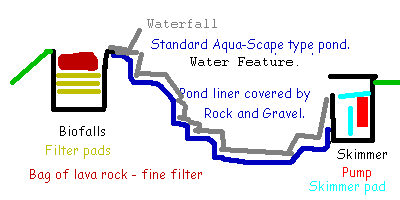
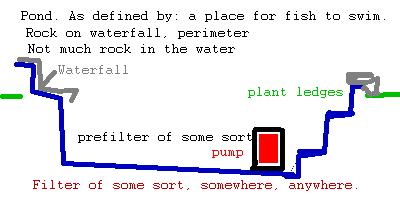
These diagrams are side views, looking through the ground at the layout of your pond. Crude sketches to familiarize you with
the parts and function of your pond.
|
Everything Fishy builds ponds. We occasionally build a water feature, without a skimmer.
We clean ponds and water features. We have changed the
liner on ponds with a biofalls and skimmer, and re-attached the biofalls and skimmer. We have repaired leaks on biofalls and skimmers.
We do not warrant the construction of your pond that we did not build. Everything sinks over time, including soft dirt walls under
tons of rock, a particular problem for tall waterfalls with ledges built of soft dirt. We find and repair leaks. We offer options
based on appearance and price, if your builder left us any options. You get to choose. We will do our best to fulfill your expectation within your budget.
We clean everything including the filter, the skimmer basket and skimmer pad, and we take photos when that pond is clean. Because as soon as water starts running through even cleaned filter media or gravel, some clouding will occur. It clears up as the filter resets, in a day or 2.
There are certain other filters that have limitations in how they can be cleaned, we follow their rules, and try not to break anything.
We will look for limestone, mortar, concrete, things that grow algae, and remove them, with your permission. And you will understand
the source of your algae problems if they are excessive. Some things require a sealant.
Many times, water features are stocked with koi.
One large koi needs 500 gallons of water to handle its bio-load and oxygen demand. You can keep 4 large koi in 500 gallons, but
only until the first power outage. And the larger fish you have, the more fish you have, the more algae you will grow. We may suggest donating large koi to the botanic gardens. (please call them, there are rules regarding donations, to prevent the spread of disease.)
Algae growth on surface areas water contacts is normal. Whether it is a drip from watering the flowers that are in the pot
on your porch, or the sidewalls of your pond, summer does paint them a bit green. Excessive algae growth, by our definition is
string that has to be constantly removed, turf algae (about 3/8 inch tall, carpets rocks and liner), and green water. Certain
water supplies are prone to problem and excessive algae. Haslet, Alvord, Decatur, Rhome, an area south of Denton and north of Fort Worth off I35,
Burleson, and probably a few more. The water in a few areas contains gypsum and has a very high pH that is toxic to plants, hard on fish, but supports excessive algae growth. When we clean in those areas, we also must repot the plants in actual dirt, and we add some nutrients to the water to support the plants, in addition to burning off some gypsum. When we build in those areas we take special steps and make sure homeowners are aware of the problems that can occur.
|
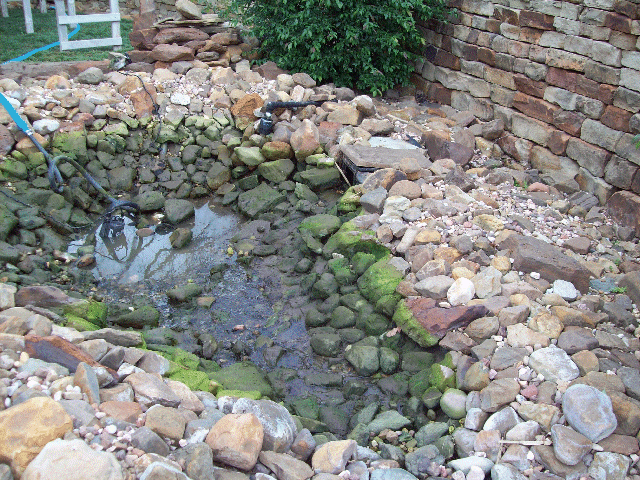
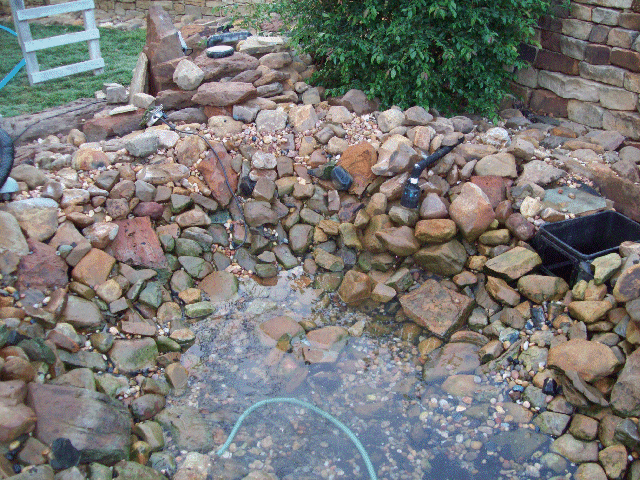
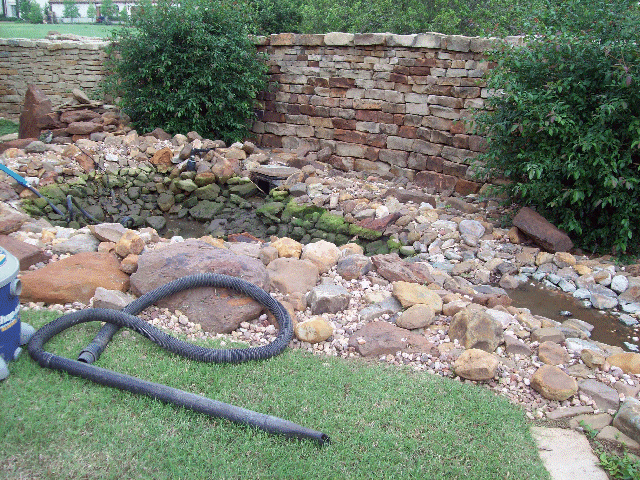
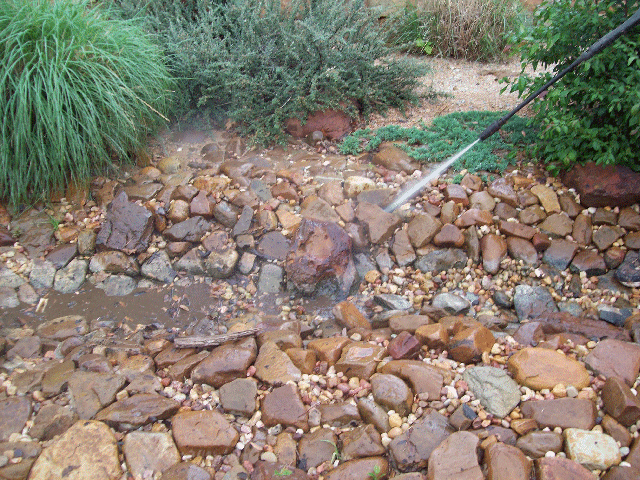
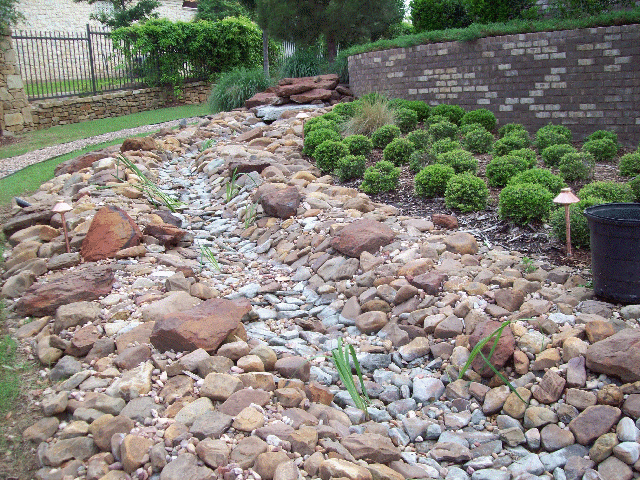
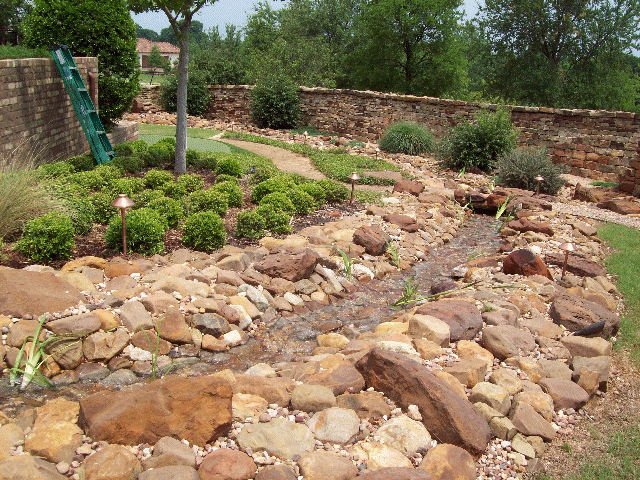
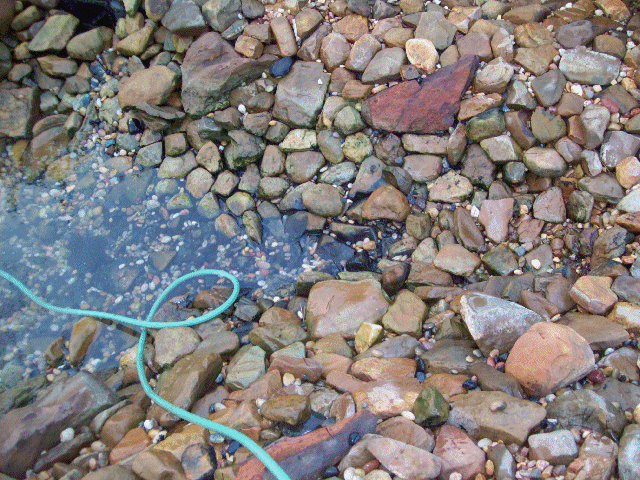
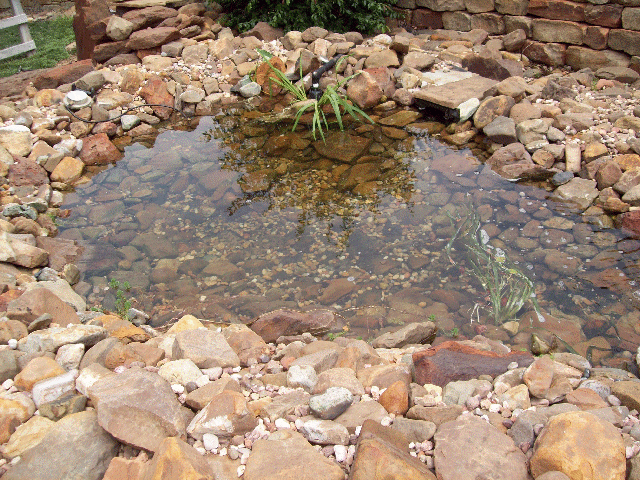
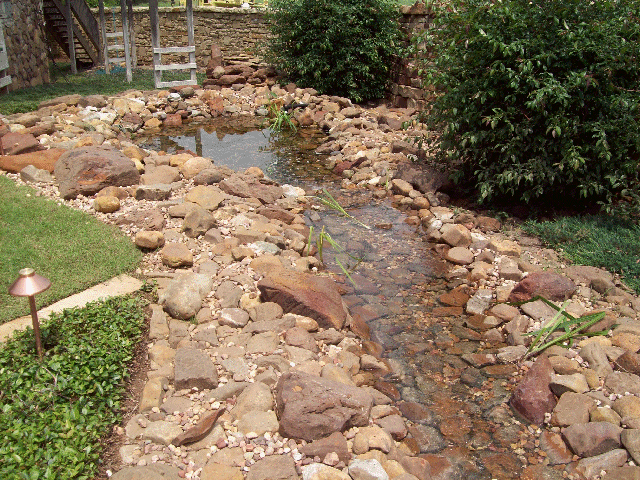
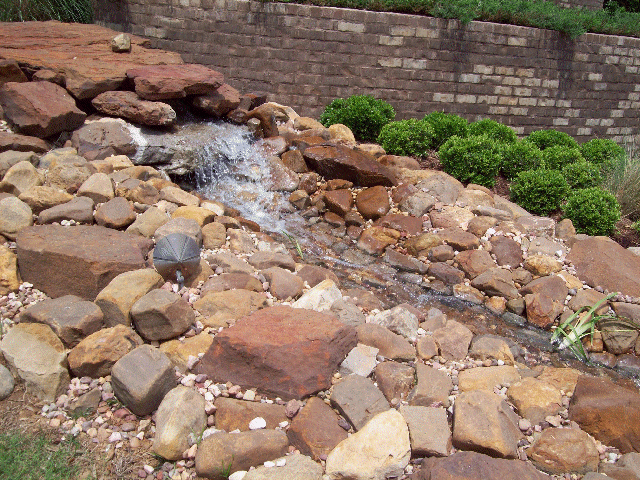
This is a simple cleanup in Keller, Texas, but the stream is around 50 ft long, from end to end.
The stream is in full sun, no plants, primed for algae growth (didn't get before pics on stream). We raised the stream wall
in areas where it was leaking. Originally there were no plants, contributing to the
algae growth, and no fish. We added plants and fish, tightened fittings on the waterfall output, and cleaned it up |
 |
 |
 |
 |
 |
 |
 |
 |
 |
 |
When your pond builder or your brother-in-law or anyone wants to build you a pond with
the cheapest local stone available, limestone, there is something you need to know: expect excessive plant growth and a LOT
of algae. All species. Nature fills a void, you provide the food, she will provide the consumers. Turf algae, heavy string algae
and green water. (the same holds true of concrete ponds by the way, but since they don't have liner, you don't have to worry about turf algae
rooting in your liner and shortening its life, you just get green water.) Chemistry being what it is, lime, whether from limestone, concrete, mortar or in your water supply, is plant food.
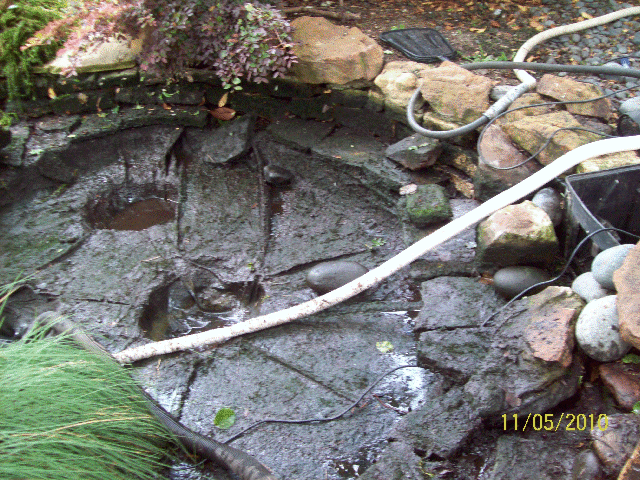
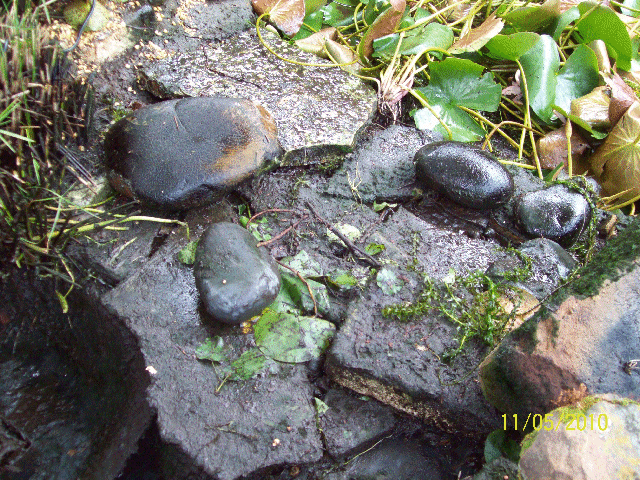
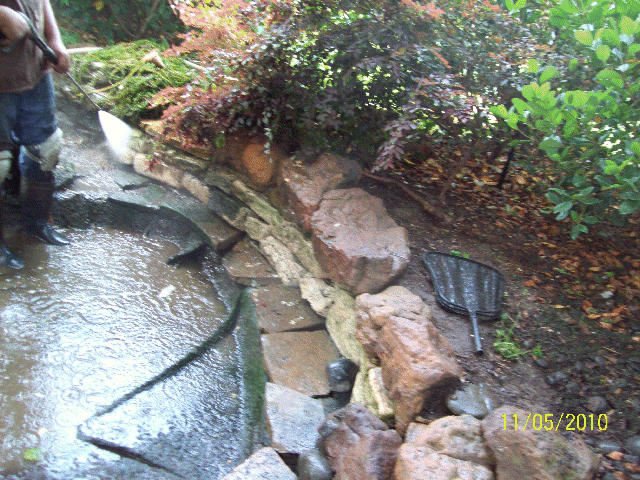
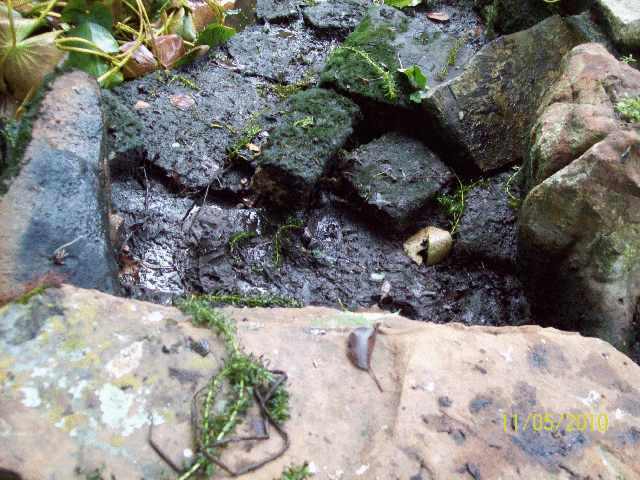
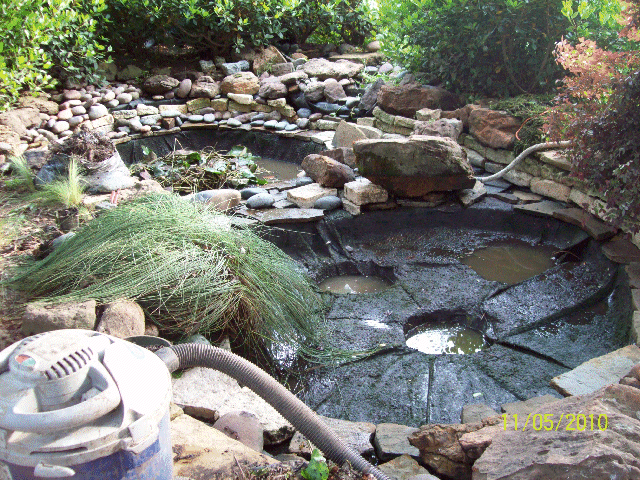
I did not build this pond, but we've cleaned it a couple of times, and we now have a sealant that can make limestone stop
leaching plant food into the water. Unfortunately, we could only coat the faces on the limestone that we could get the sealant
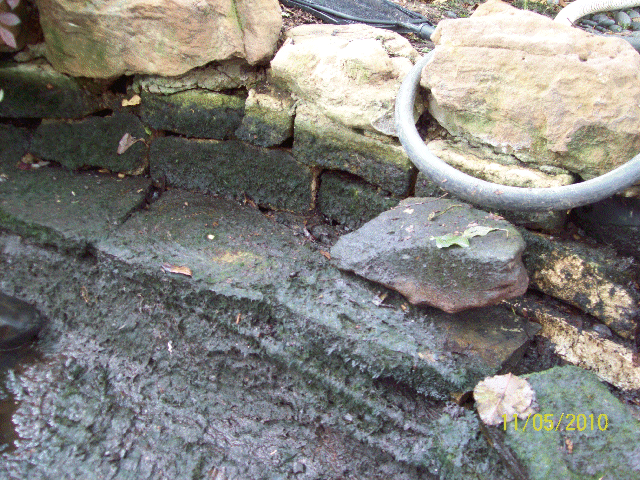
to, but anything to slow the algae down is going to be a big plus here. Turf algae cannot be scrubbed or pressure washed off liner.
After it is pressurewashed it looks like clean astro-turf. Hence the nickname. We sterilize our equipment after working on a pond
with this. Algae killers do not seem to affect it. Best way to remove it, remove or seal the offending stones and change the liner. This
is not cheap. So we are sealing the stones with X3 aqueous silicone, to cut off its food supply, and hoping it will die back. We've had fair results with this.
X3 is relatively non toxic, if a drop falls in with fish they do not die. It is fully transparent, no gloss, lasts 2 years before it will need a recoat due to UV from the sun, and Everything Fishy is the Texas distributor.
|
 |
 |
 |
 |
 |
 |
We deliver and install perennial and annual landscape plants, bog plants, hardy water lilies, and some large goldfish,
thick bodied, brilliant red/orange color. Fish are subject to availability. Recommended stocking load for goldfish:
1 adult fish per 100 gallons. Recommended stocking load for koi: 1 mature fish per 500 gallons.
I prefer not to stock with koi, but will on ponds over 1000 gallons. Koi eat your pond plants and lilies, then rapidly outgrow your pond's capacity
because they never STOP growing. I also avoid fantails or fancy breeds that raccoons can catch in 30 seconds.
We answer emergency calls as quickly as possible. Often we can tell you, by phone, what to do to temporarily
rescue your fish until we can get there. Everything Fishy's telephone number is 817-293-1782. If you get
the answering machine and have an emergency, leave a message with your telephone number. Or email the link on this page,
which goes to my cell.
Pond photos - photos of ponds we built or rebuilt: Pond photos page.
The Do It Yourself pond: Pond design tips to save you time, money and grief.
Good filtration is critical to a healthy pond. Aeration helps to control temperature in the summer and enhance
conditions for your fish, in addition to allowing many creative options in the way your pond appears, and sounds.
The pleasant sound of trickling water, or the roar of a larger waterfall can be arranged.
Higher water temperatures increase the metabolic rate and waste output of fish. The waste output from goldfish
at 84 degrees is about twice as high as the waste output at 72 degrees. Green water is often a symptom of inadequate
filtration, but even the best filter will be straining to keep up if the pond water temperature is over 75 degrees.
Cooling your pond, by adding an additional pump and fountain, may solve some green water problems. Particularly
if you've already tried a UV light, and the water remains greenish and hazy, a thermometer can be a very wise investment.
Cattails and native water plants enhance the ecosystem by using up nitrates. They also soften and naturalize
the appearance of the pond. Water lilies bloom in the morning during the summer months, and provide shade for the
fish during the heat of the day. However, as time has passed, we have seen too many ponds taken OVER by cattails.
They are particularly a problem in Aquascape style ponds with rock and gravel bottoms, as they send runners
under the gravel all over the pond. To make matters worse, they puncture the liners. Water lilies have soft roots and I have
never seen a liner punctured by a water lily's roots. They can get out of hand and cover the water's surface. But given a choice,
removing excess lilies is easier. We sell winter-hardy water lilies, aquatic iris, pickerel rush, water canna, and the occasional umbrella plant (also
incorrectly called papyrus) Umbrella plants should be potted, like cattail they can send off sharp roots, but not as bad as cattails.
Great ponds stay healthy with great pond supplies - To find them click here.
Aquatics information, photographs, articles Copyright © 1999 - 2017 by Alice Burkhart, All Rights Reserved.